HISTORICAL BUILDINGS
NATIONAL LIBRARY OF ARMENIA
1928-1940
State index: 1․6․66
Architect: Alexander Tamanyan
The
main building of the National Library of Armenia is located on Teryan Street in
Yerevan. It was designed in 1928 as a research institute building. The
structure was built in the Student District, where, according to the 1924
master plan of Yerevan, it was intended to construct the city’s higher
education institutions.
Construction
began in 1930 and the building was commissioned in November 1940. It was
designed to accommodate up to 700,000 volumes. Until 1958, the Matenadaran also
operated in this building.
It
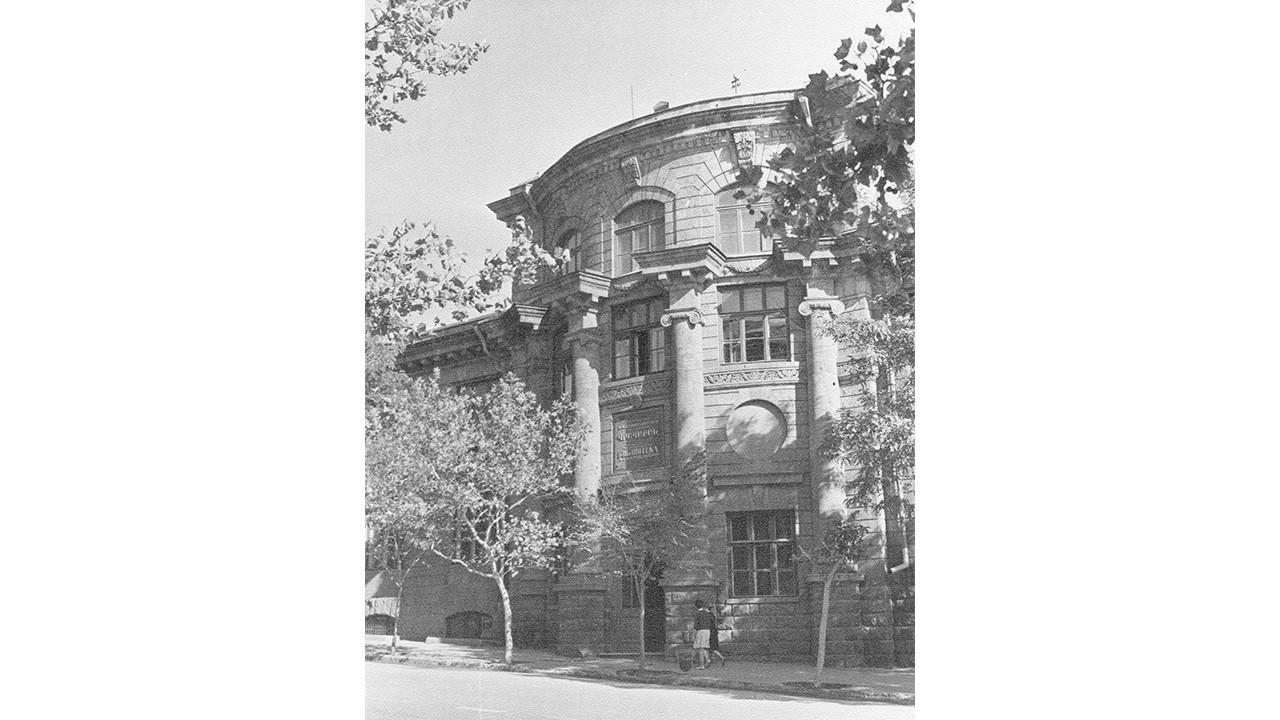
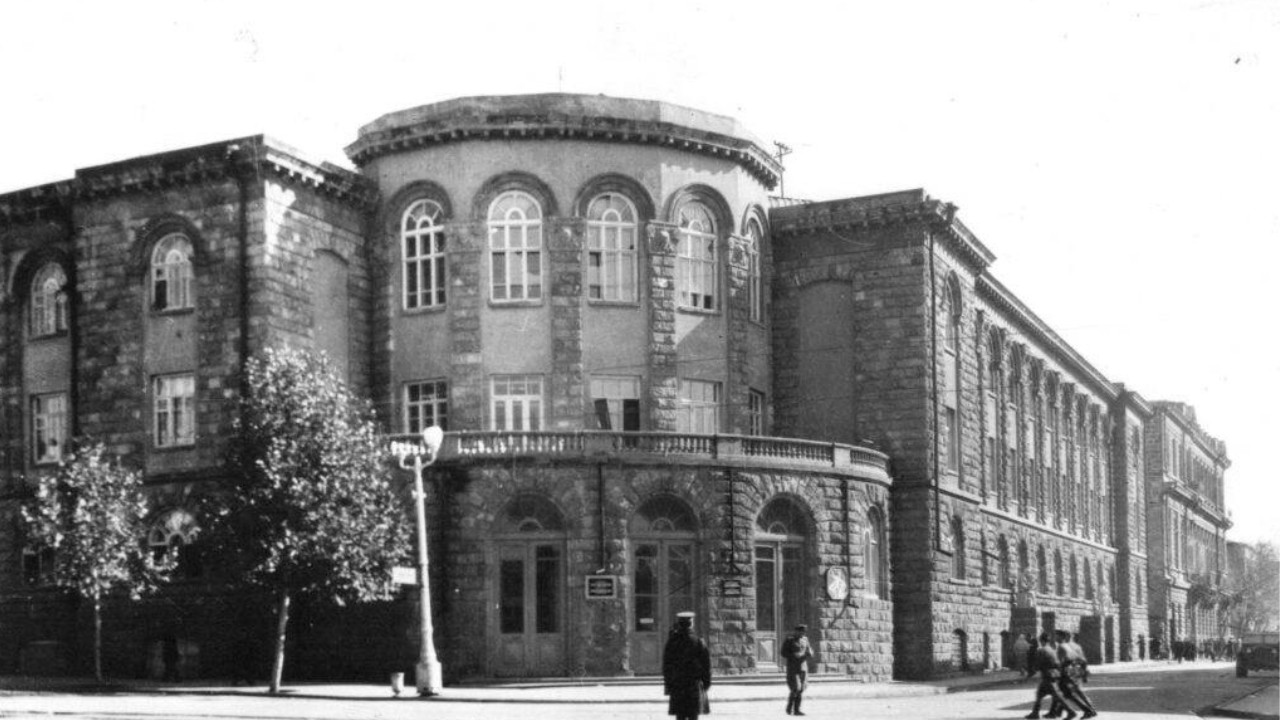
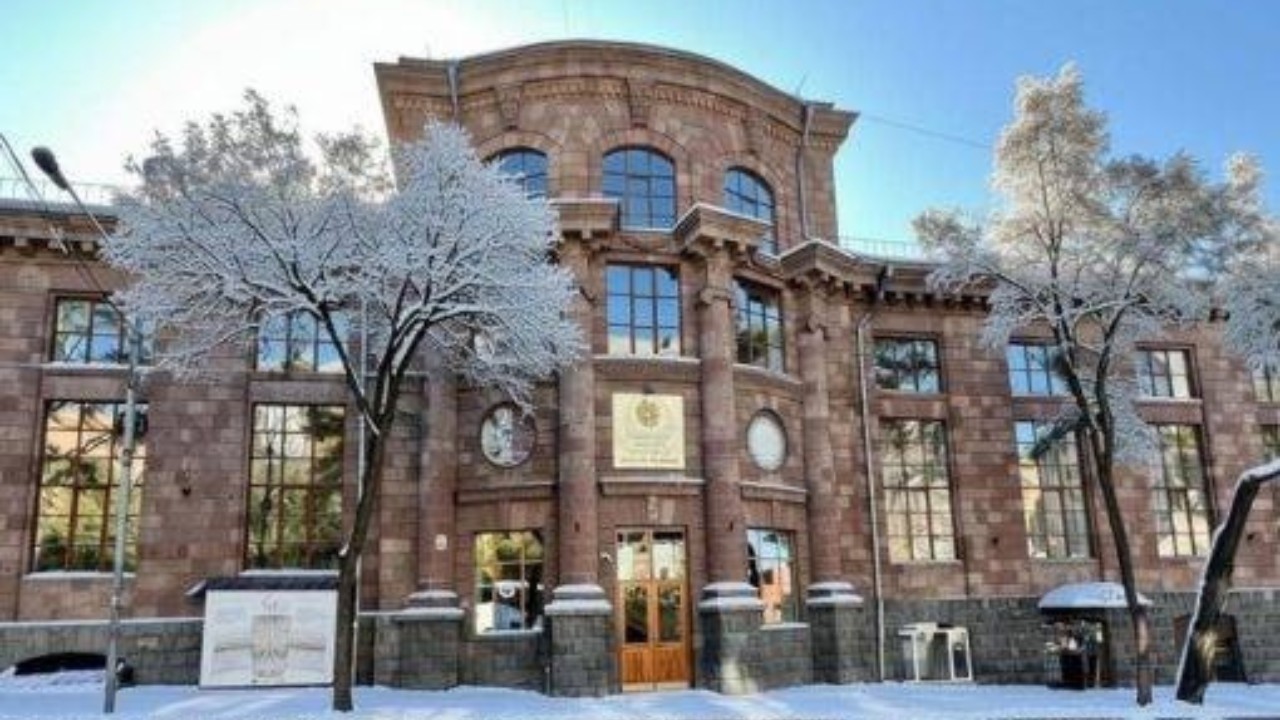
is a spacious structure with a U-shaped plan. The main three-storey façade is
emphasized by a semicircular volume articulated with Ionic semi-columns
projecting from the general plane of the building. The entire façade is crowned
with a classical cornice. The side wings are two-storey.
Internally,
a stepped arch motif was used, which also appeared in Tamanian’s early works
and was applied to architectural elements of façades, particularly entrance
designs. The building is constructed of Artik tuff using medium (mids) masonry,
while the ground floor is made of rough basalt.
The
architecture continues Tamanyan’s creative period of Russian neoclassicism. A
characteristic feature is the compositional motif frequently found in his
works, including semi-circular protruding forms of rotundas (main library
entrance), among others.
Tamanyan’s
original design did not provide for future expansion of the book depository;
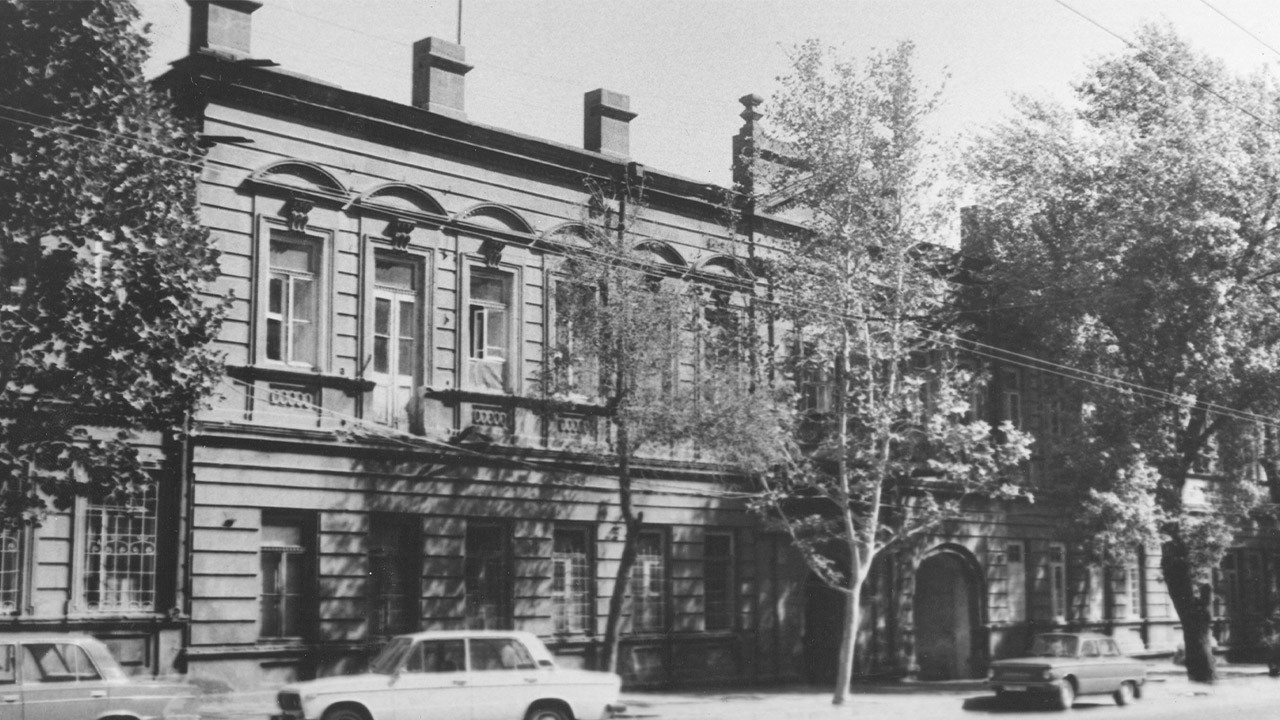
therefore, in 1979 a second building was constructed adjacent to the main
structure (architects: Gevorg Tamanian, Aelita Navasardyan), and in 1989 a
nine-storey book depository was added (architects: Aelita Navasardyan, Petros
Abajanyan). The building was fully renovated between 2008 and 2011.