MUSEUMS AND GALLERIES
ARMENIAN GENOCIDE MUSEUM-INSTITUTE
The mission of the Armenian Genocide Museum-Institute is to conduct academic, scientific research and analysis of issues related to the first genocide of the 20th century, as well as to contribute to the international community's struggle against the genocide through the exhibition of textual and visual materials.
State index: 1.6.106.11
Architects: Arthur Tarkhanyan, Sashur Kalashyan, Lyudmila
Mkrtchyan
Sculptor: Ferdinand
Arakelyan
In April 1995, on the 80th
anniversary of the Armenian Genocide, the Armenian Genocide Museum-Institute
was opened.
The
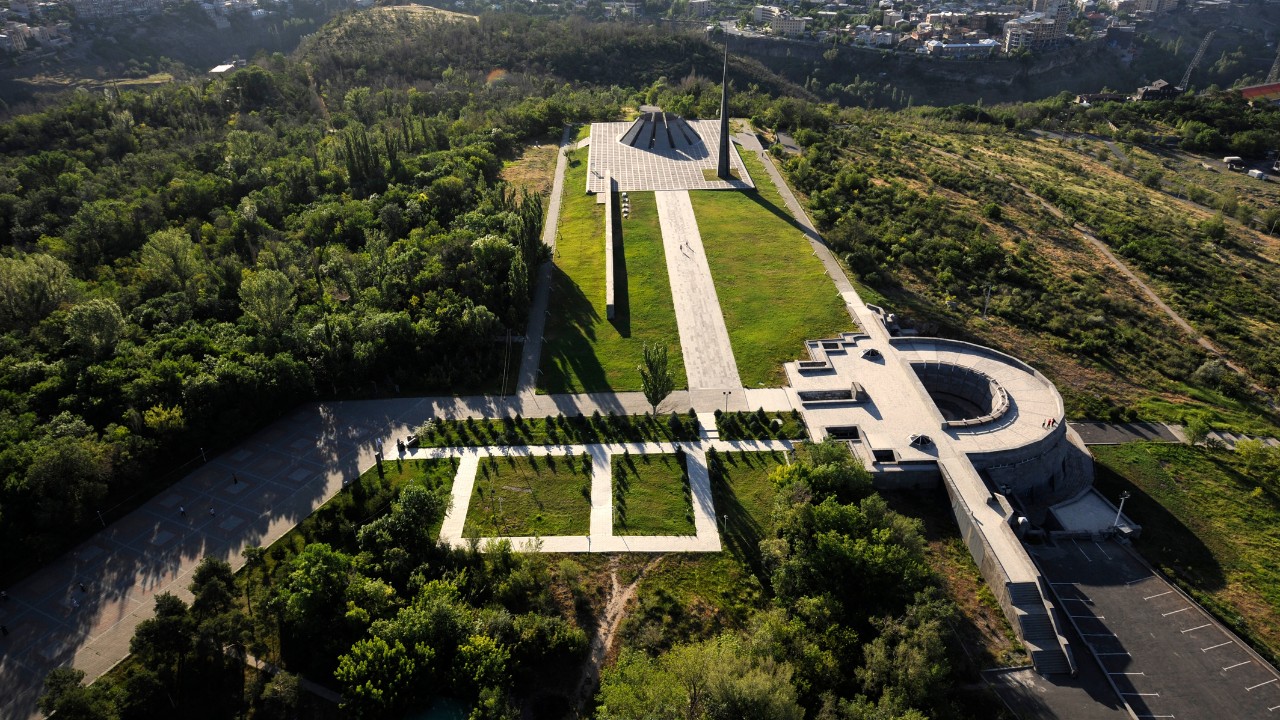
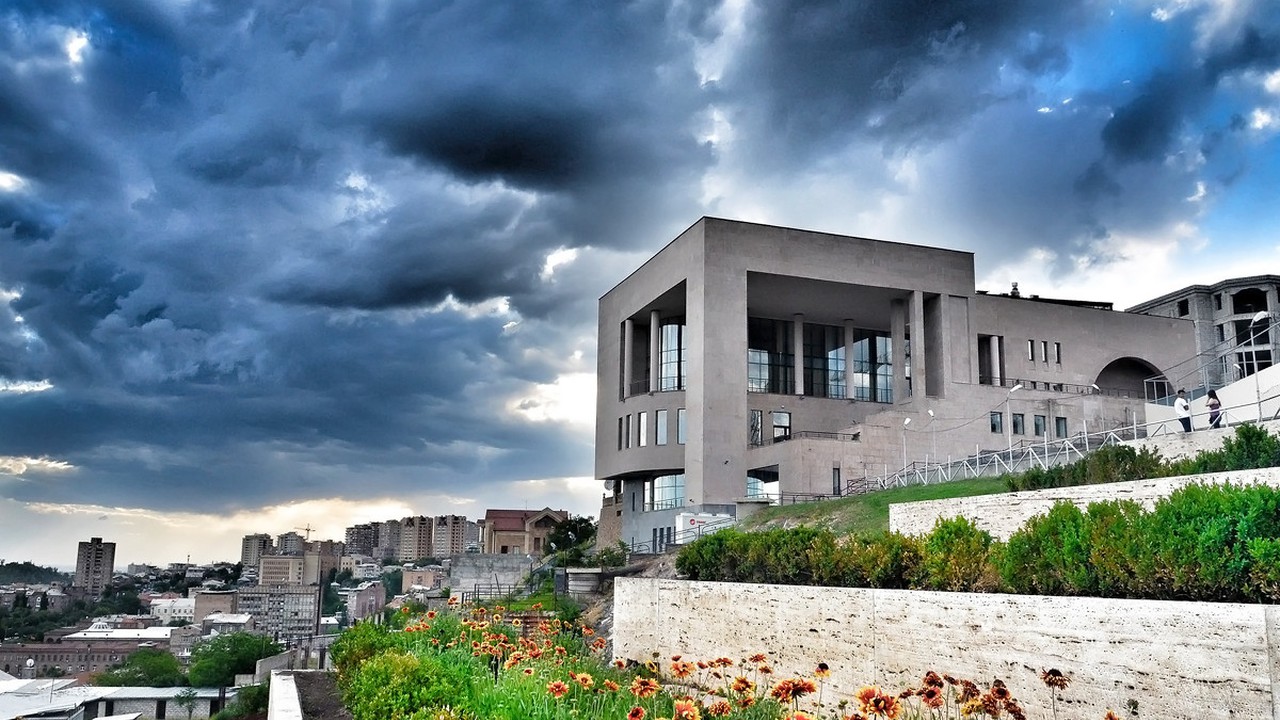
museum's architectural composition stands out for its unique volumetric-spatial
solution. The northern wall of the museum blends with the silhouette of the
hill. The surface of the building's roof is leveled with the platform of the
Great Calamity Monument. The two-story, circular building with descending
stairs leading to the entrance. Above the entrance, engraved on a basalt slab,
are the numbers: 1915, ՌՋԺԵ (Armenian numerals).
Opposite
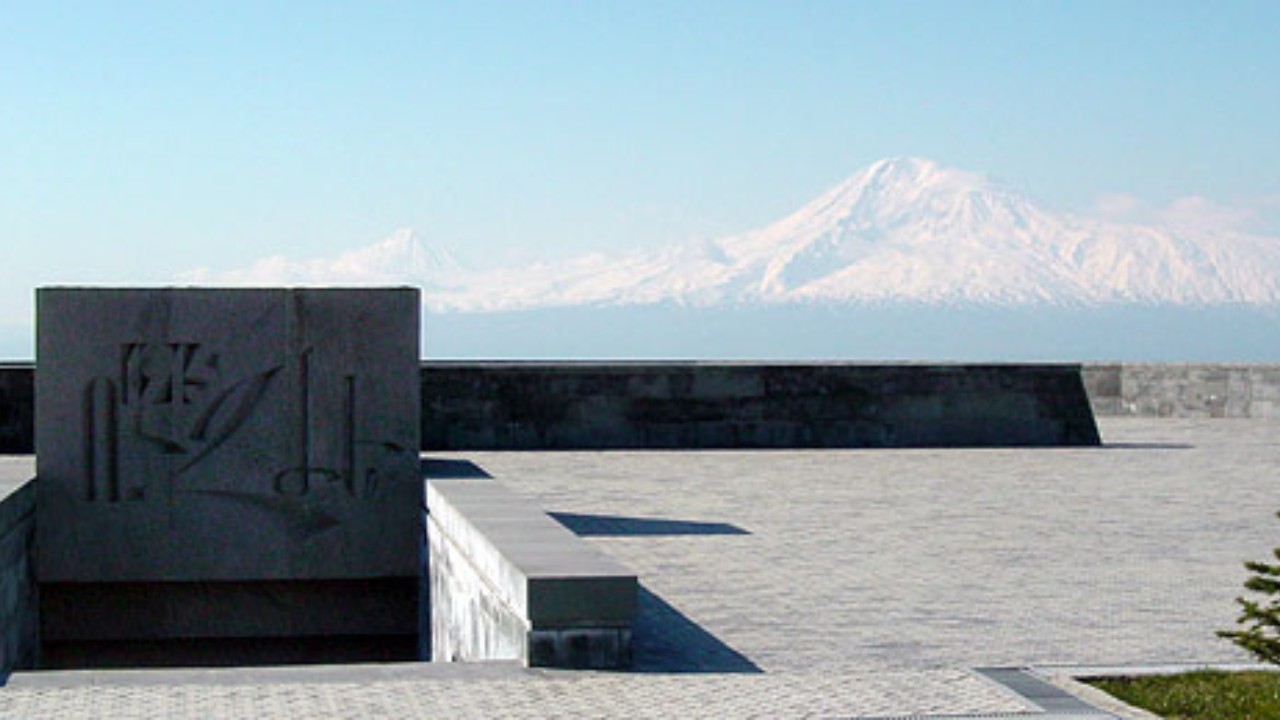
the entrance leading to the inner courtyard stands a large, horizontally
positioned khachkar (cross-stone) in the shape of a tombstone with an arched
top (sculptor: Ferdinand Arakelyan). The upper left half of the khachkar bears
the engraving:
“MORNING OF LIGHT, LET THE SUN OF JUSTICE SHINE ITS LIGHT
UPON ME”.
In 2011-2015, for the 100th anniversary of the
Armenian Genocide, major renovation works were carried out on the territory of
the Armenian Genocide Memorial Complex, the Tsitsernakaberd Avenue and the
adjacent area were improved, the main building of the museum-institute was
renovated, the administrative part was built - the library, the conference
hall, the storage rooms, etc.
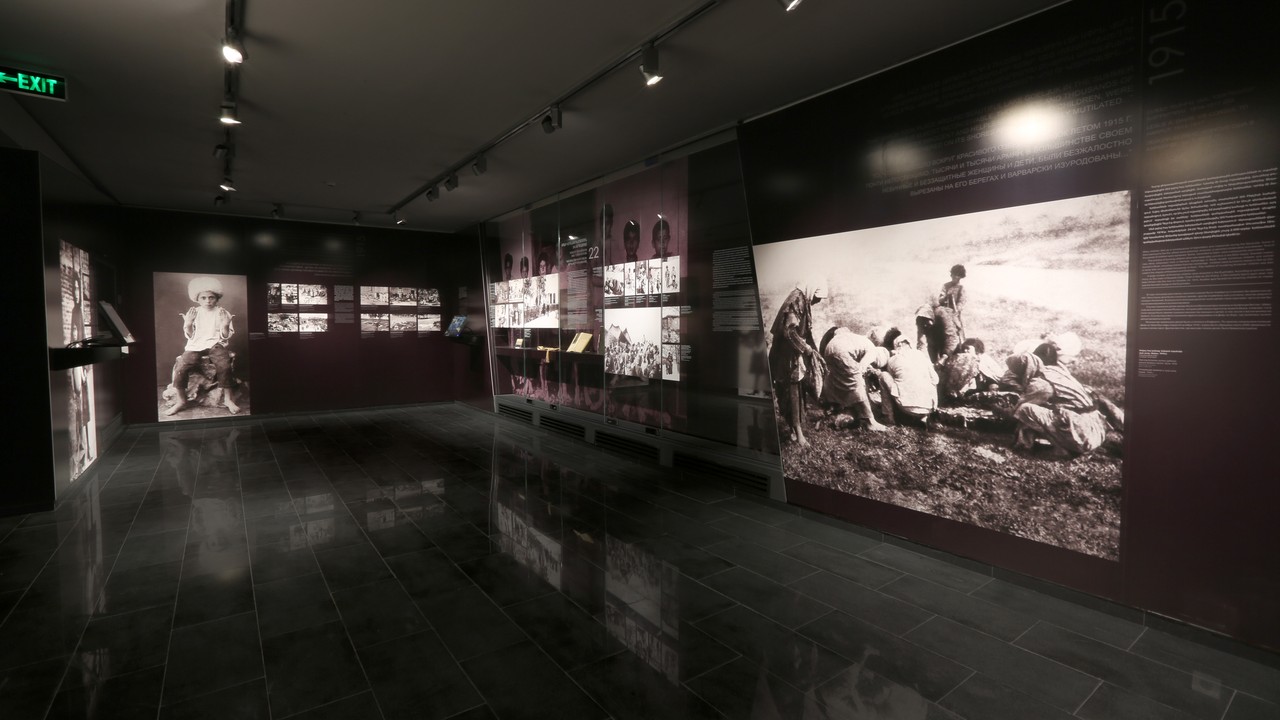
In 2015, the new exhibition of the museum was reopened, which was expanded two
and a half times, amounting to 2,400 square meters.
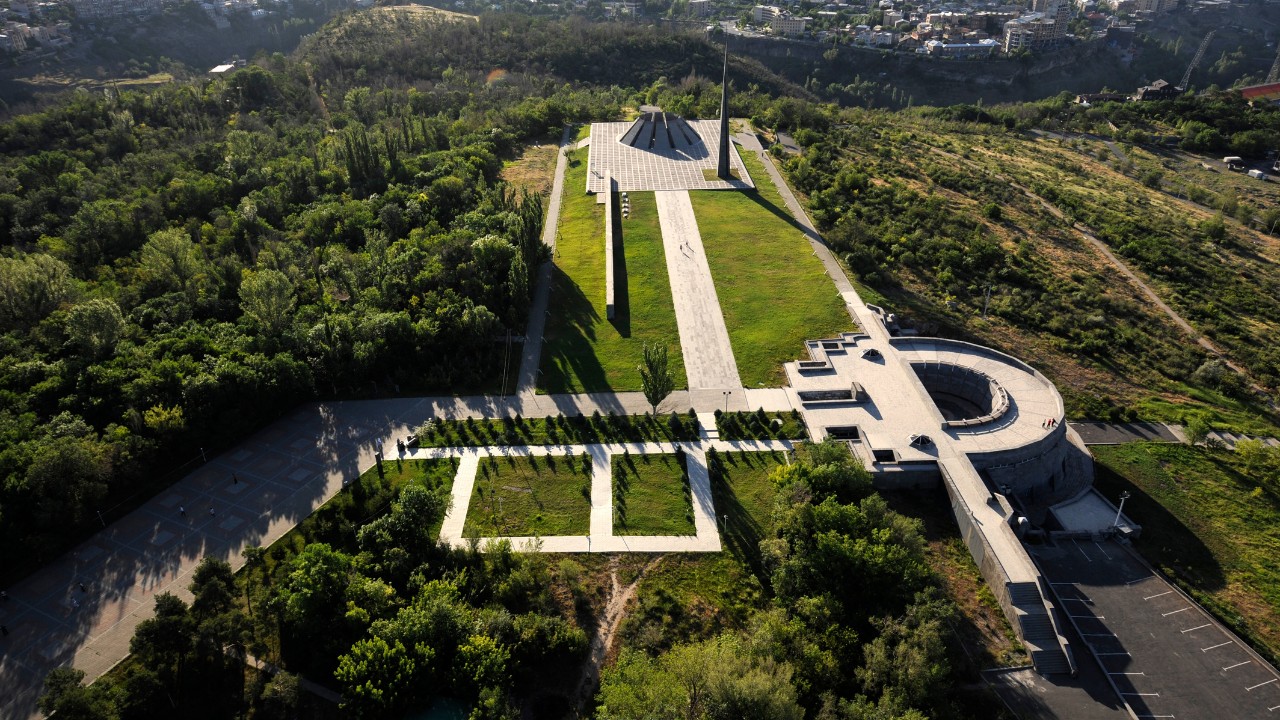
The Armenian Genocide Memorial is
dedicated to the memory of 1.5 million Armenians who fell victim to the
genocide committed by the Young Turk government throughout the territory of
Ottoman Turkey (Ottoman Empire). Since 1967, when construction was completed,
the Memorial has become an integral part of Yerevan's architecture. Located on
a hill and standing out from the general landscape, the Memorial is in perfect
harmony with its surroundings, and the simple outlines of the structure convey
the spirit of the nation that survived the genocide. The architects of the
Memorial are Artur Tarkhanyan and Sashur Kalashyan.
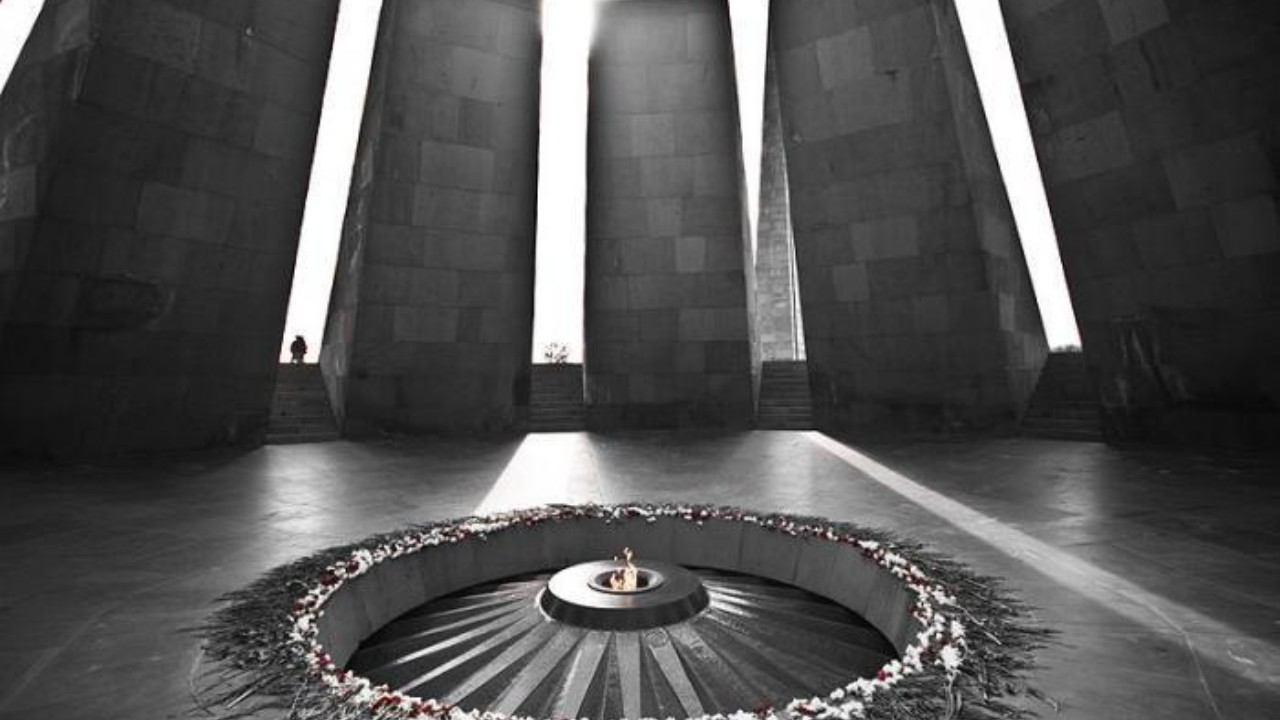
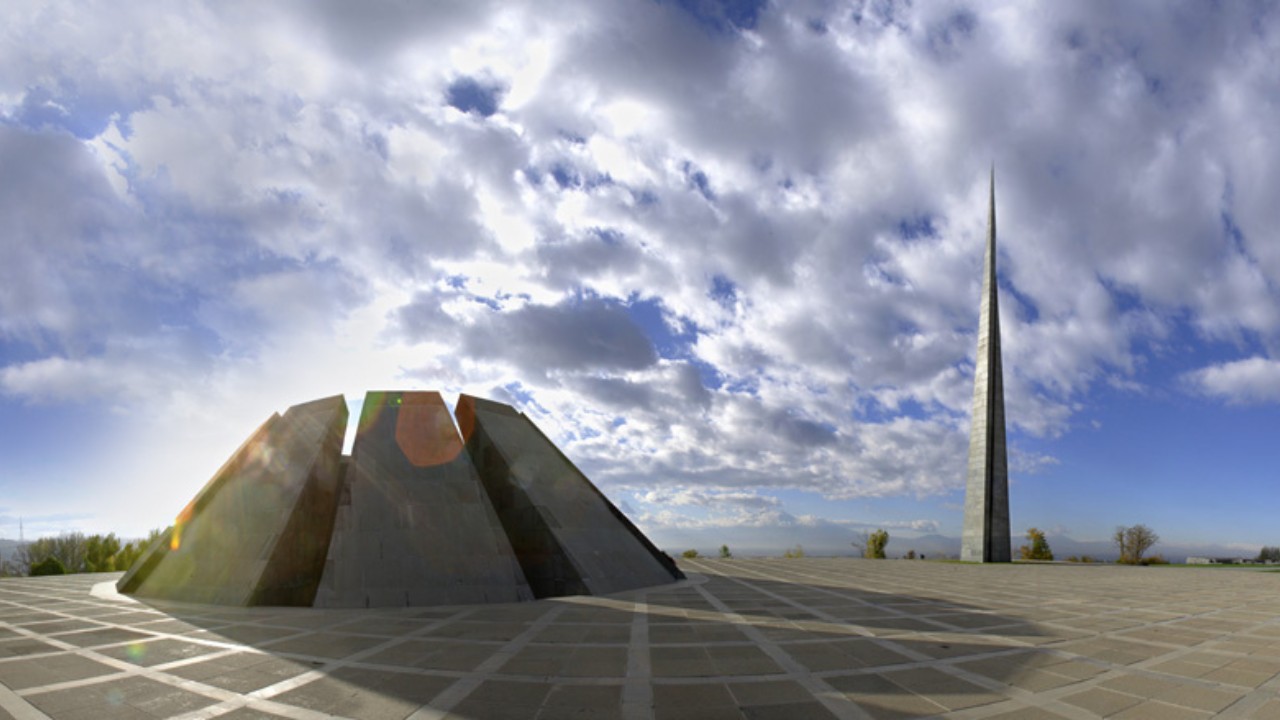
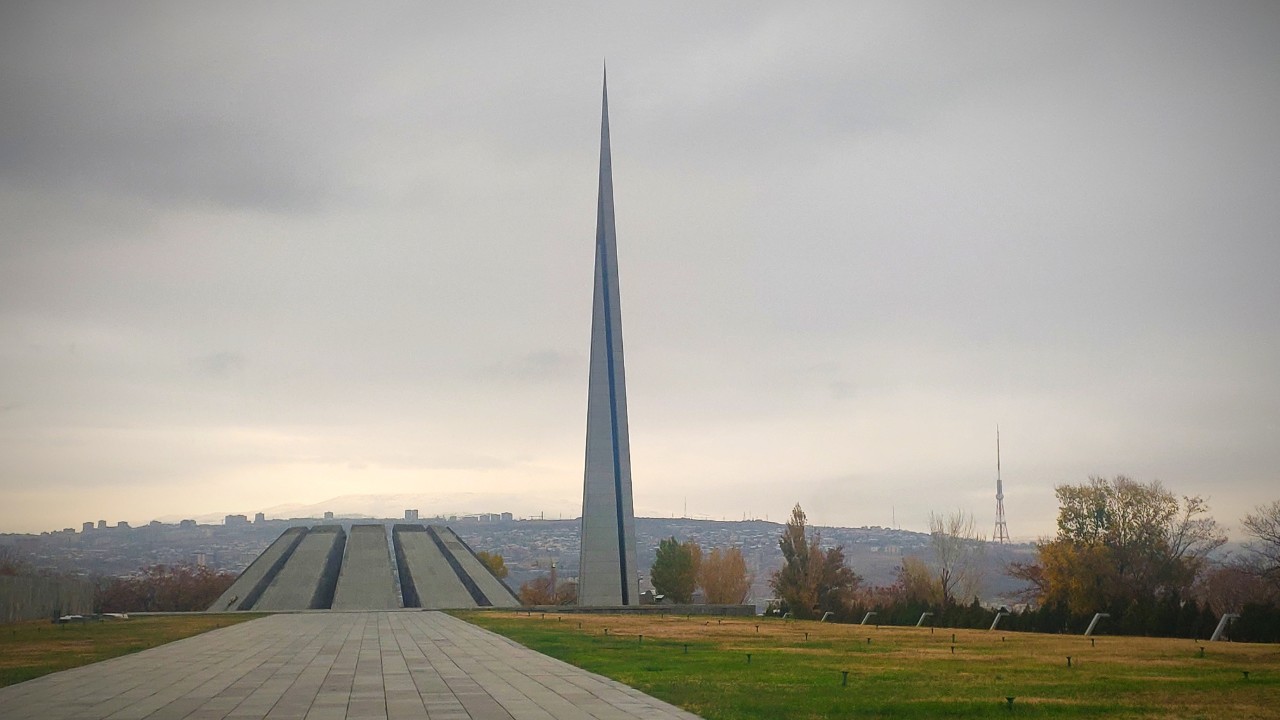
The Memorial covers an area of 4,500 square meters and consists
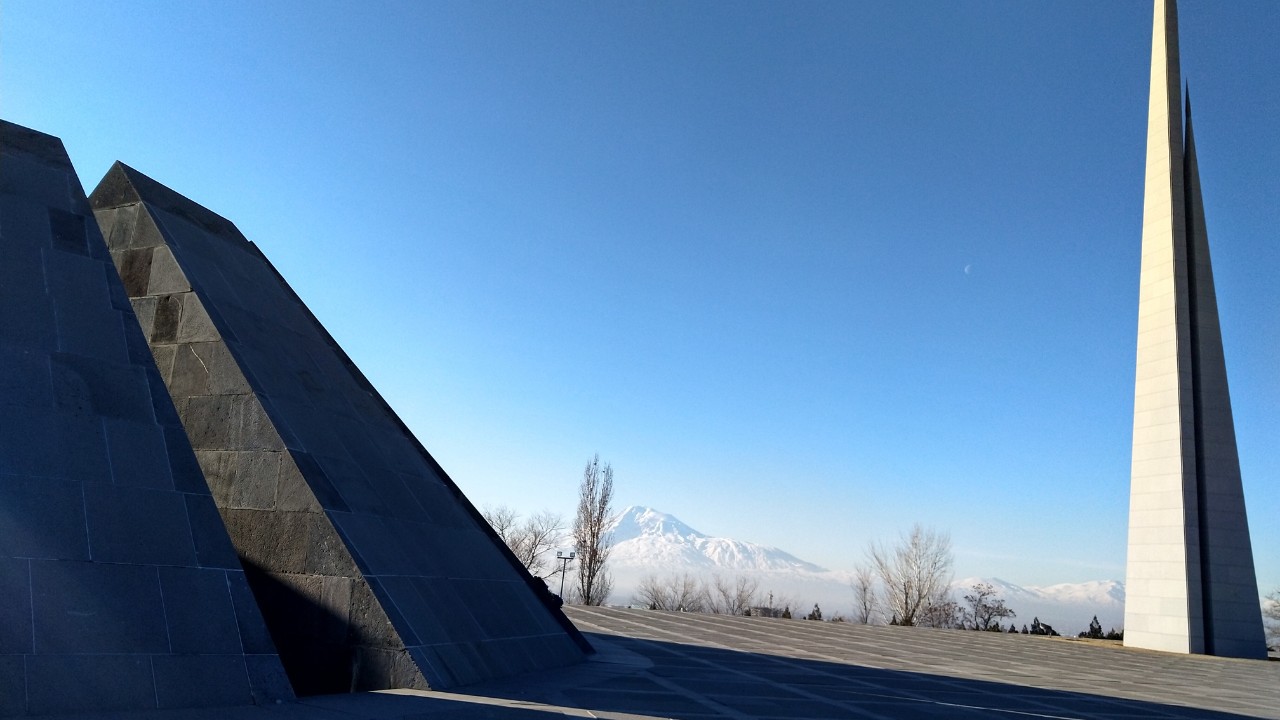
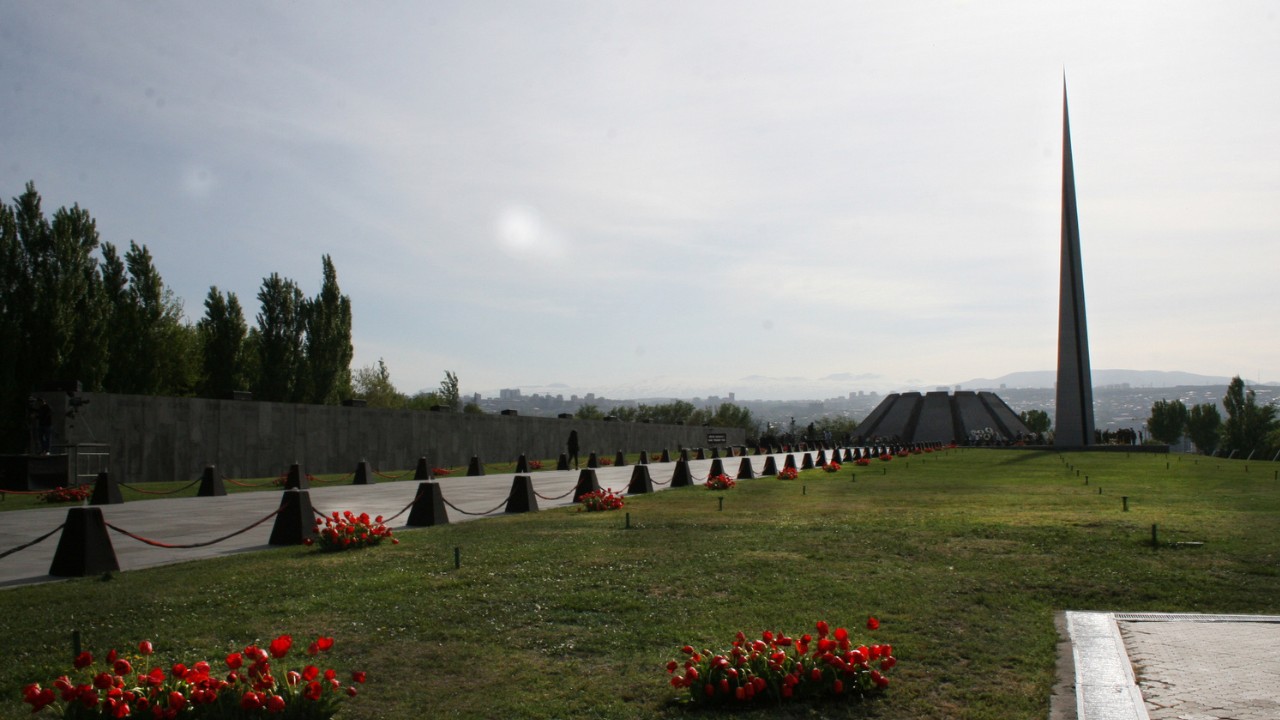
of three main structures: the Memorial Wall, the Temple of Eternity with an
eternal flame, and the "Revived Armenia" memorial column.
1988-1990 cross stones have been
placed in the area of the
Armenian Genocide Memorial in memory of the Armenians who fell victim to the
massacres organized by the Azerbaijani government in the Azerbaijani cities of
Sumgait, Kirovabad (Gandzak), and Baku. In 1990-1992, five freedom fighters who
died during the Armenian-Azerbaijani conflict were buried in the area opposite
the Memorial Wall.
VISITOR INFORMATION
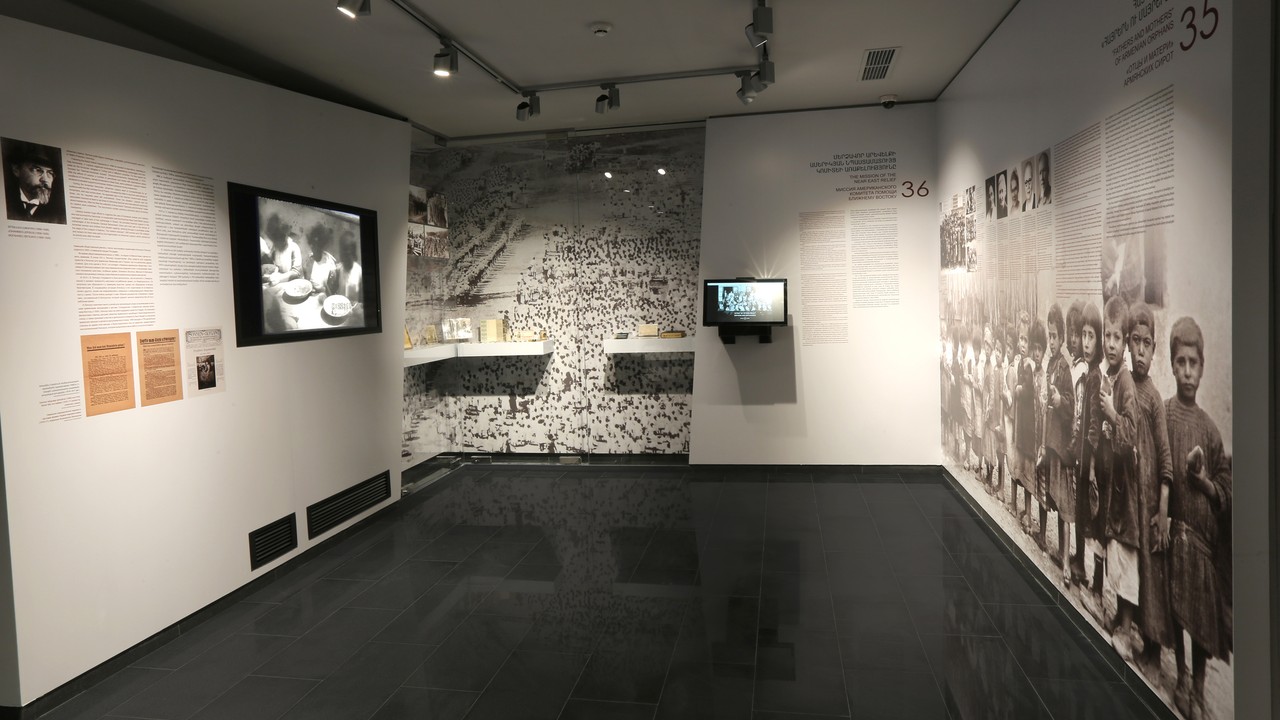
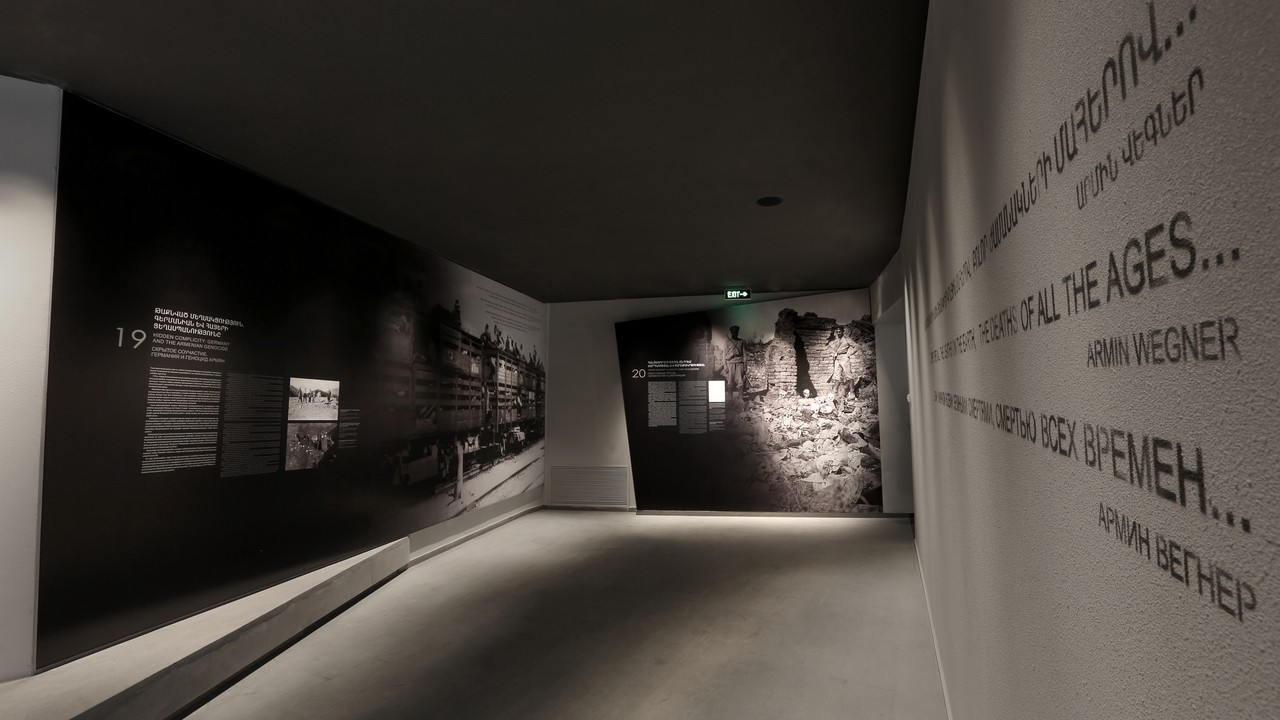
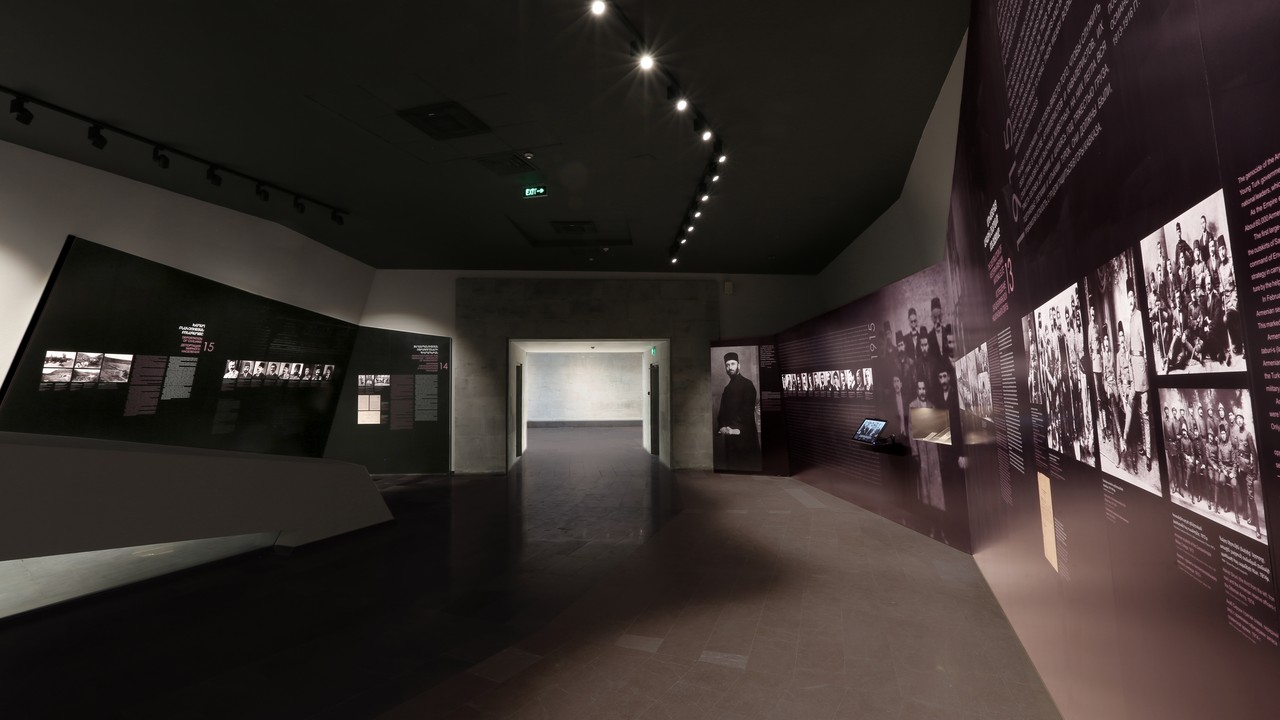
The Armenian Genocide Museum-Institute researches, preserves and exhibits documentary materials, photographs, literature, etc. on the Armenian Genocide committed in the Ottoman Empire in 1915. For the first time in Armenia, the museum has applied new technologies, design approaches and solutions that are widely used in world museum practice. The content solutions, text materials and explanatory notes of the museum exhibition are based on recent scientific and methodological developments in the field of genocide studies.
The documentary materials and relics presented in the museum's permanent exhibition reveal the details of the Armenian Genocide that took place at the beginning of the 20th century and reflect the attitude of the international community.
HOURS AND ADMISSION
Tuesday to Sunday:
- 10:00-17:00 (March-December)
- 11:00-16:30
(December-March)
On April 24, the museum's working hours will be extended.
ADMISSION
Еntrance is free.
EXCURSION
Armenian:
- Group of 1-10 people – 5000 AMD
- Group of 10-20 people – 7000 AMD
Foreign
languages:
- Group of 1-10 people – 7000 AMD
- Group of 10-20 people – 10000 AMD
Audio
guide – 2500 AMD
A
guided tour must be booked in advance by calling +374 10390981 or +37477391412.