HISTORICAL BUILDINGS
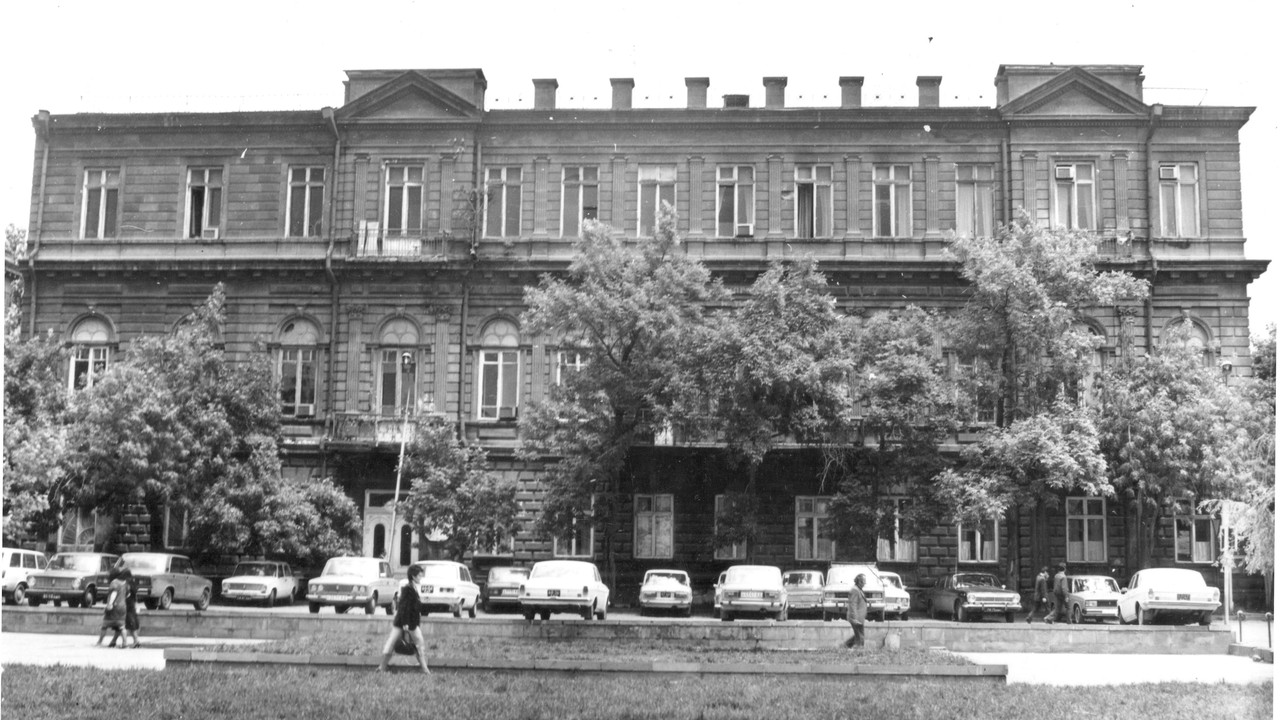
BUILDING OF THE YEREVAN BRANCH OF THE STATE BANK
1902
The
building is located on Aram Street.
The
Yerevan branch of the State Bank was opened on October 7, 1893, by decision of
the Ministry of Finance of Imperial Russia. The issue of land allocation for
the construction of the building was resolved in March 1899. Construction was
completed in 1902.
From
1918 to 1920, the building served as the State Bank of the First Republic of
Armenia. After the Sovietization of Armenia, in the 1920s it came under the
authority of the People’s Commissariat of Finance of the Armenian SSR.
During
the reconstruction works of the 1930s, a third floor was added to the building
(architect: Nikoghayos Buniatyan), and the wings were extended in the
directions of the two streets. The central pediment was removed, while the side
attics were raised above the level of the third floor.
As
a result of reconstruction in the 1960s, the floor plan acquired an
asymmetrical U-shaped form, in which the old building became the left wing of
the complex. Since the years of World War II, when a hospital was established
in the building, the State Bank was converted into a hospital.
Built
of Yerevan black tuff, the building is two stories high and has a U-shaped
floor plan. The main section faces Aram Street along its longitudinal side
(69.7 m), while the other side, together with the intersecting right wing,
faces Koghbatsi Street (42.8 m).
The
rooms are arranged in a double-row layout and separated by a corridor. In the
main volume, the rooms are 6.3 m wide. The cantilevered balconies face the
street. The main entrance is from Aram Street. There is also an entrance from
Koghbatsi Street.
The
windows on the first floor are rectangular, while those on the second floor are
semicircular. Particular attention has been given to the treatment of the
street-facing façades. Especially noteworthy are the cantilevered balconies
facing Aram Street, supported by wooden brackets decorated with sculpted heads
on the sides.
Originally,
the balconies had railings with horizontal bands, which were later replaced
with metal lattice railings.